
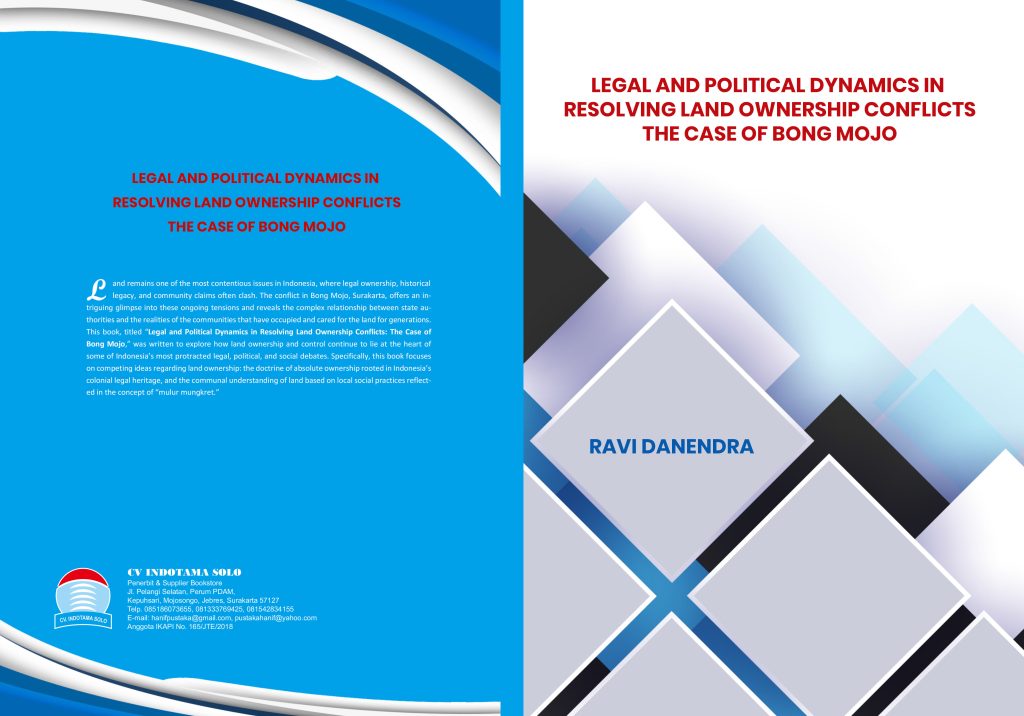
Penulis : Ravi Danendra
Desain cover : Jaka Susila
Editor : Hasna Nasywa Wijaya
Layout isi : Farhan Dloifur Yusuf
Ilustrasi : freepik, vecteezy
Halaman preliminary: i – vi
Halaman isi : 1 – 54
Ukuran : 17.6 × 25 cm
ISBN dalam proses pengajuan ke Perpusnas
SINOPSIS : Land remains one of the most contentious issues in Indonesia, where legal ownership, historical legacy, and community claims often clash. The conflict in Bong Mojo, Surakarta, offers an intriguing glimpse into these ongoing tensions and reveals the complex relationship between state authorities and the realities of the communities that have occupied and cared for the land for generations. This book, titled “Legal and Political Dynamics in Resolving Land Ownership Conflicts: The Case of Bong Mojo,” was written to explore how land ownership and control continue to lie at the heart of some of Indonesia’s most protracted legal, political, and social debates. Specifically, this book focuses on competing ideas regarding land ownership: the doctrine of absolute ownership rooted in Indonesia’s colonial legal heritage, and the communal understanding of land based on local social practices reflected in the concept of “mulur mungkret.”